Designing for growth and engagement at billion-user scale
At Facebook, I owned features across notifications, video, birthdays, feed, and live audio, partnering with large cross-functional teams to keep the app cohesive.
Role
Product designer
Timeline
2020 & 2021 · Internships 2022–2024 · Full-time
Scope
Growth and engagement surfaces
Skills
Product design Prototyping Systems thinking
My experience
Many teams. One Facebook.
Each product team had its own goals and metrics, but people experienced one Facebook. I owned features within those teams and drove alignment toward decisions that served both the team and the wider product.
The work
Driving a product forward
My work spanned different teams and surfaces, but fell into two themes:
1
GrowthHelping people reach and revisit Facebook.
2
Consumer engagementKeeping Facebook’s social flywheel moving.
The experiences shown here are work I owned that were either publicly launched or tested.
Growth
Designing when and how Facebook should ask people to turn on notifications, log in, or visit the app from the open web.
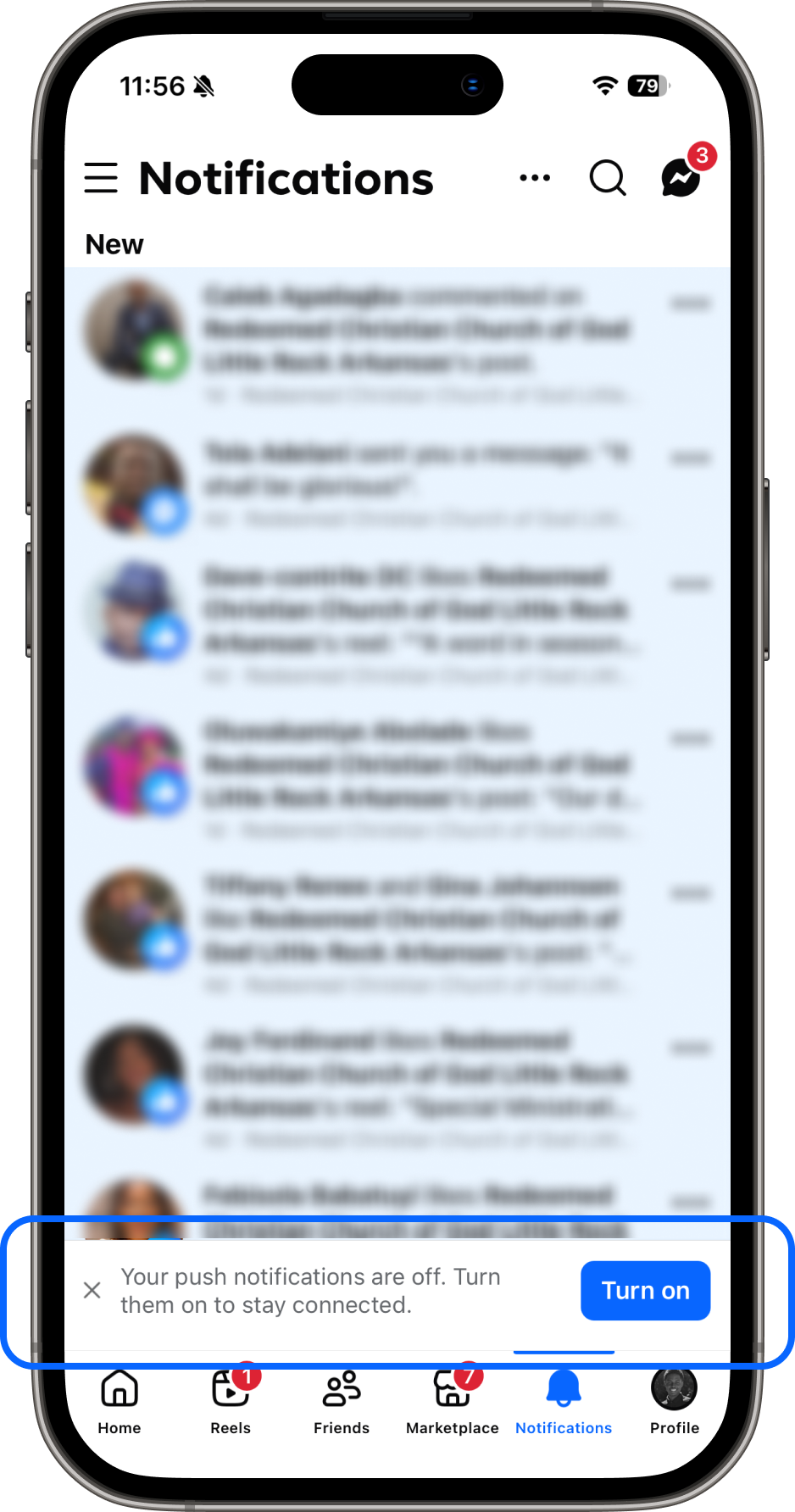
I designed prompts for contextual moments to encourage people to turn on notifications so the Facebook app could reach them again.
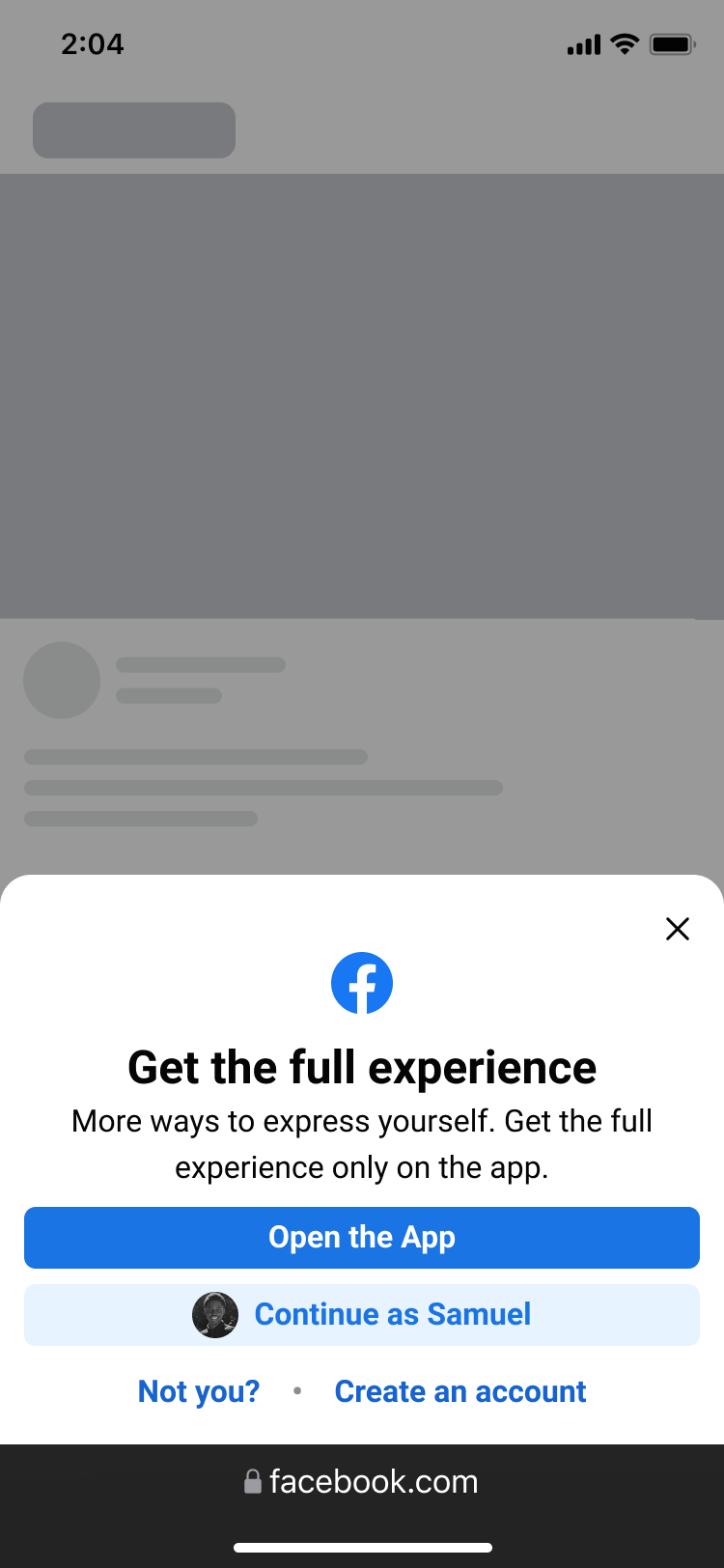
Contextual app entry and login on web
02 · Off-platform entry
Turn off-platform video into an acquisition channel
For people arriving from outside the app, I designed a better logged-out video experience and app-entry moments. They could watch what brought them there, then choose whether to continue in the app.
Consumer engagement
Designing participation across live audio, birthdays, and feed while keeping each experience connected to the wider product.
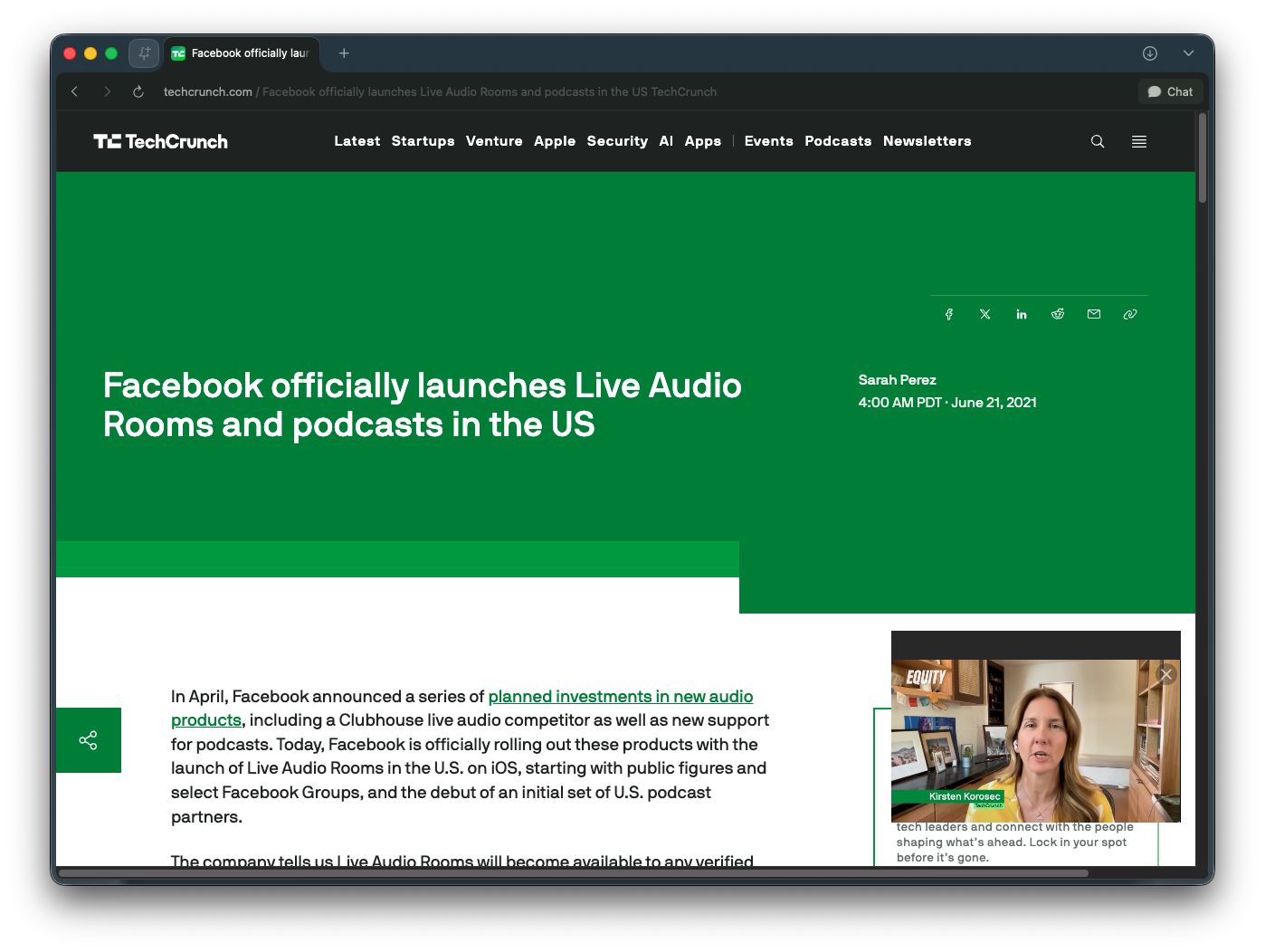
As an intern on the listener experience, I helped bring Live Audio Rooms to the web by designing how people discovered a room and moved between full-screen, in-feed, and minimized listening. Because timing and state were central, I used interactive prototypes instead of static screens. The web experience launched publicly in the U.S. in 2021.
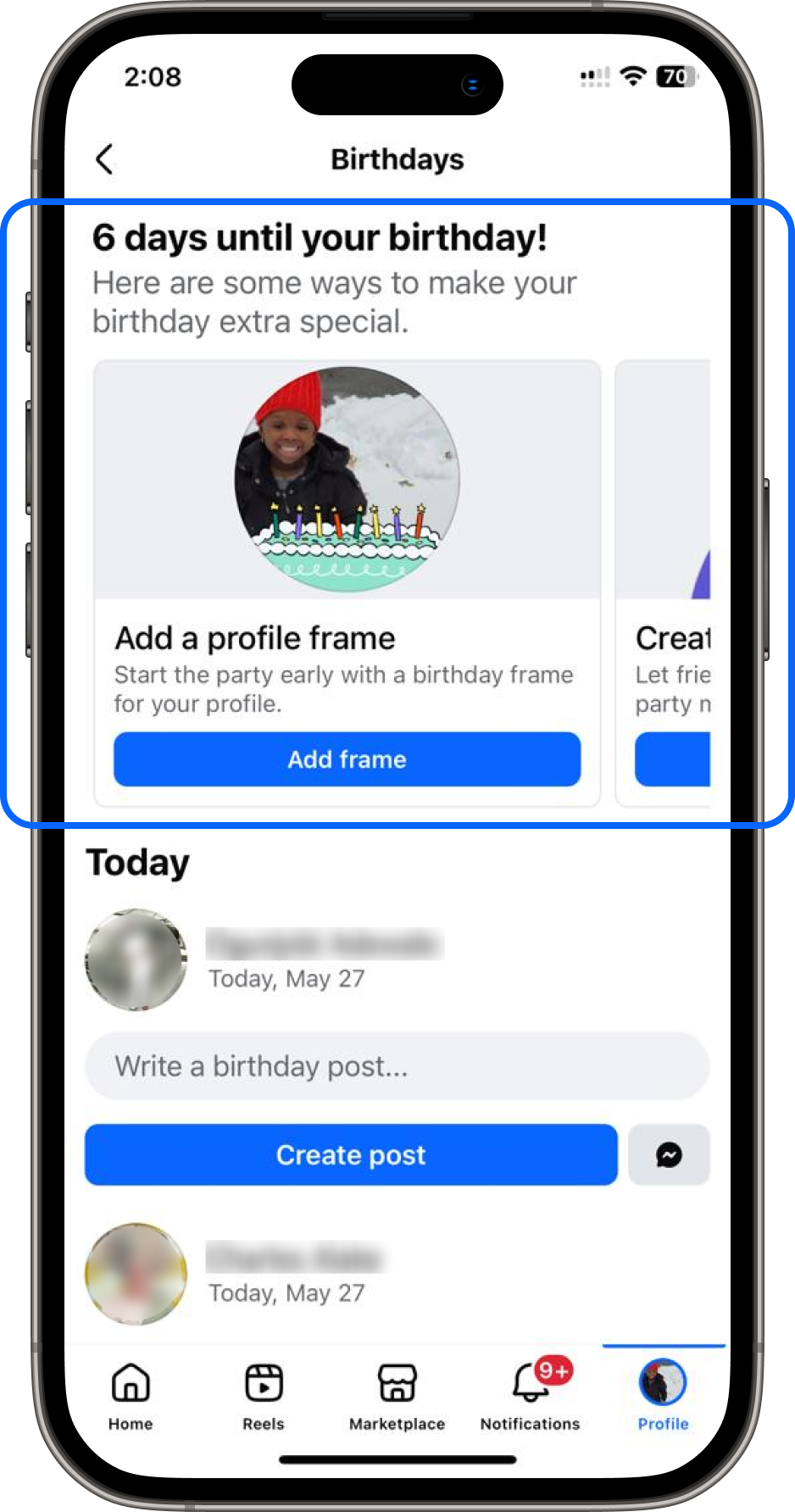
Birthday countdown
04 · Birthdays
Expand how people celebrate birthdays on Facebook
I owned the design for Facebook Birthdays and added features across notifications, feed, profiles, and creation. The work included ways to celebrate before the day arrived, personalize the moment, and respond afterward.
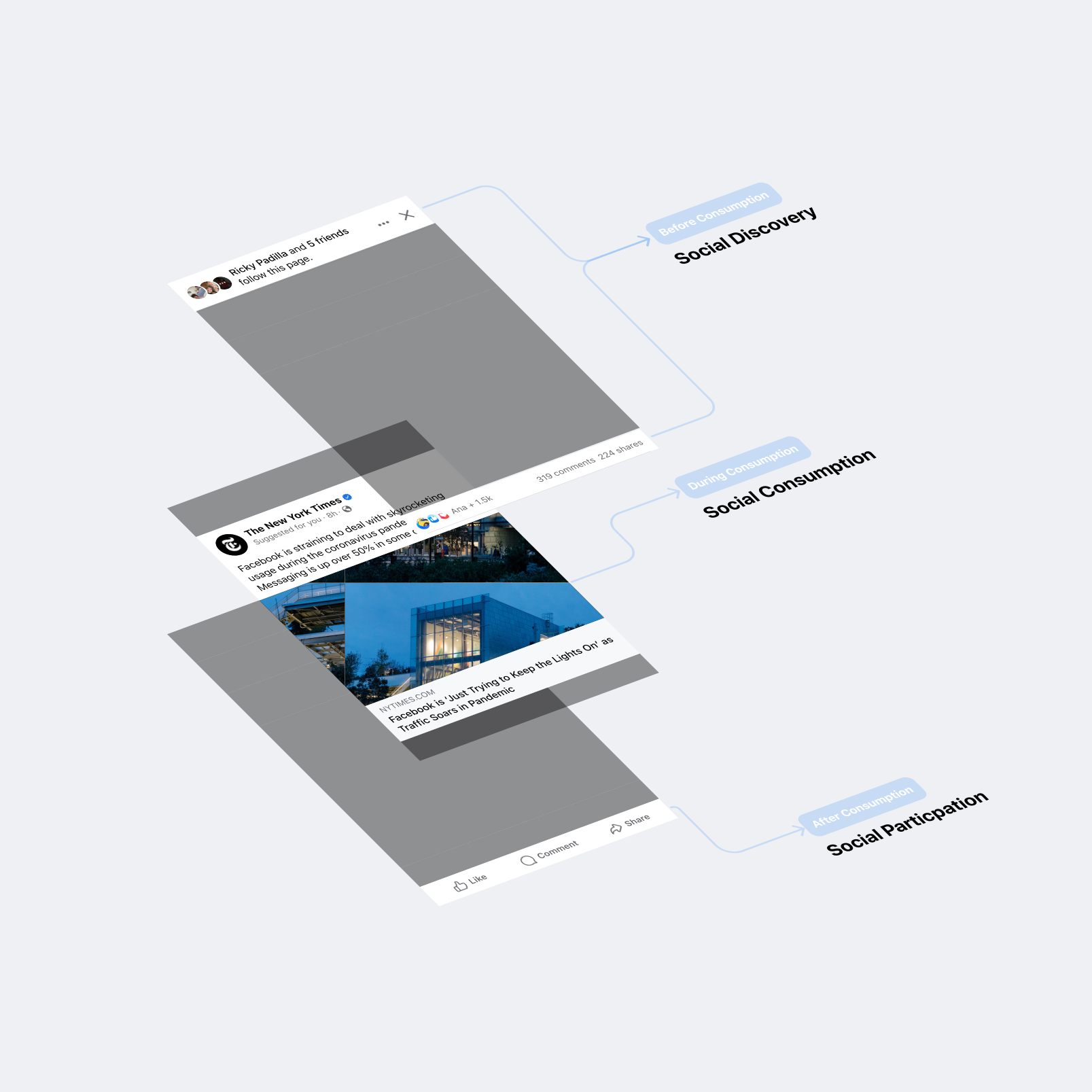
05 · Feed
Use social context to make recommendations relevant
Among other work on Feed, I focused on social context and proof, signals that helped people understand why the content they discovered was relevant.
How I worked
Build alignment around clear product decisions and principles
Communicate the decision
I used PRDs, working sessions, reviews, and prototypes to make the problem, rationale, and interaction concrete. I chose the artifact based on the decision and audience, using my judgment to give the team what it needed to decide and move.
Root the rationale in principles
When I brought work to partner teams, I grounded the rationale in shared principles. When teams brought work to me, I evaluated it against my team’s principles and domain knowledge, then used that context to ask sharper questions and guide the decision.
Reflection
What I learned
Find the overlap between user value and team goals
I learned to look for the overlap between a team’s goals and a real user need. That was where ideas could genuinely resonate with people and reinforce the metrics the team cared about.
Break the work down and sequence it
At large scale, progress depended on breaking ambiguous work into decisions the team could test, learn from, and sequence. PRDs and prototypes made each step concrete.