
01 · Onboarding
Onboarding introduces the full loop, from finding and importing recipes to planning, cooking, and shopping, before someone enters the product.
Trove · iOS · 2026
Trove pulls recipes from Instagram, TikTok, YouTube, and the open web into one place to cook from. You can save an editable copy, plan it into your week, and turn several recipes into one grocery list.
The problem
A recipe found in a social post or blog can disappear, change, or remain awkward to use in the kitchen. Bookmarking keeps the link, but it does not make the recipe easier to plan, shop, or cook. Trove keeps recipes in one place so you can return when you are ready to use them.
The product
Trove connects the whole recipe journey: import something you want to make, discover more through other people, plan it into the week, cook it, and shop for what comes next.
01 · Onboarding
Onboarding introduces the full loop, from finding and importing recipes to planning, cooking, and shopping, before someone enters the product.
02 · Import
There are two ways to import a recipe. From Safari, someone can share it directly to Trove without leaving the browsing flow. Inside the app, they can tap Add and paste a link. Both paths create a private, editable copy.
03 · Discover
Search returns people and recipes together, keeping the person behind a recommendation visible alongside the dishes they share.
04 · Plan and cook
Recipes from a person's Trove can be placed into a weekly plan. Guided steps and timers then make each recipe easier to follow in the kitchen.
05 · Shop
Trove gives you one list to maintain across the week. Someone can move an item from To buy to Stocked as their pantry changes, then shop for the remaining ingredients.
Product decisions
Early user feedback indicated that Discover was not showing enough food that felt familiar or reflected people's nationalities. Although the flat feed already ranked recipes using saved preferences, ranking alone did not make the range easy to scan. I regrouped Discover by cuisine, gave each cuisine a dedicated page, and added a star so people could explicitly shape what appears more often.
Shopping creates a business opportunity for Trove, but grocery-cart partnerships are difficult to access before a product has scale. I considered platforms such as Chicory and Instacart, then narrowed the first implementation to two paths I could support now: Kroger can add items directly to a cart, while Amazon uses an affiliate web handoff where someone shops ingredient by ingredient. Which path is available also depends on a person's location.
Recipe publishers depend on visits to the original page and own the copyright to the recipe's directions and media. Trove therefore keeps the publicly visible recipe limited to its cover, ingredients, attribution, and source link.
When someone saves a recipe to their Trove, the app opens the publisher's page and imports the directions into a private copy owned by that person. The publisher receives the visit, while the person can edit, plan, and cook from their copy.
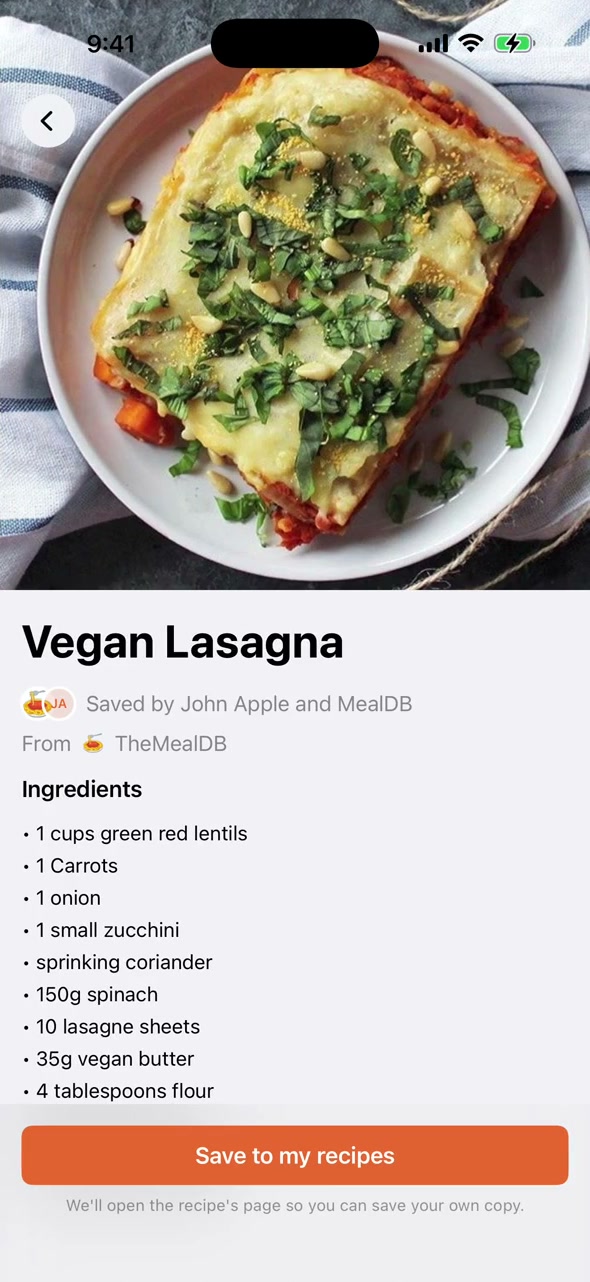
How could Trove make recipe aggregation social? For V1, attribution signals on recipe details, public profiles, people search, following, and saves give people ways to connect, see who saved a recipe, and find more from them.

Future product direction
The current version establishes the path from finding and saving a recipe to cooking and shopping for it. My plan for the next version is to sprint across three areas.
Where it stands
Trove is available on TestFlight with the core journey working from discovery and import through planning, cooking, and grocery.
Once it's approved on the App Store, the next phase is to market the app, bring in more users, and collect enough product data to decide the app's next direction.
Reflection
Choose the problem with the clearest product and business value, then prioritize the smallest version you can build and ship.
The project began closer to health and behavior change. I narrowed toward the problem with a clearer flywheel and more immediate value: helping recipes move from discovery into planning, shopping, and cooking.
Once the problem was clear, I drew the V1 boundary around importing a cookable copy and making it useful across the week. Richer commerce and community contribution could follow after the core product was reliable.